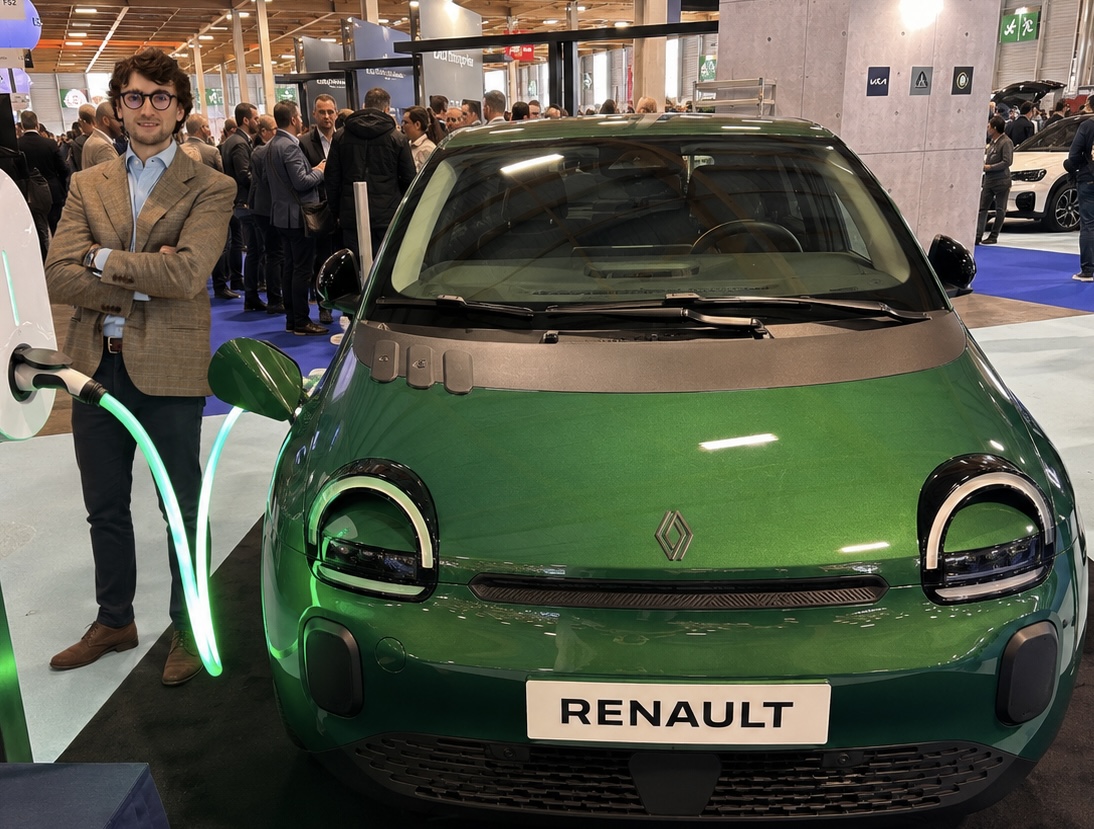
Electric vs. Petrol vehicles in 2026: A Buyer's Guide for Luxembourg & France
By Overdrive Services - Fleet Manager (France / Luxembourg) and Automotive Broker - Updated May 2026
May 2026 context: a historic surge in fuel prices Since the outbreak of the Middle East conflict on February 28, 2026, Brent crude has climbed above $100/barrel (+60% in two months). In Luxembourg, SP95 reached €1.798/L as of April 30, 2026. In France, it has crossed €2.00/L.
This guide is your starting point on the EV transition. It answers one straightforward question: Is 2026 the right time to make the switch to electric?
Inside, you will find a side-by-side comparison of energy costs, an overview of the incentives available, and a snapshot of the TCO (Total Cost of Ownership).
1. Energy Cost Comparison: Electric Vehicle vs. Petrol Vehicle
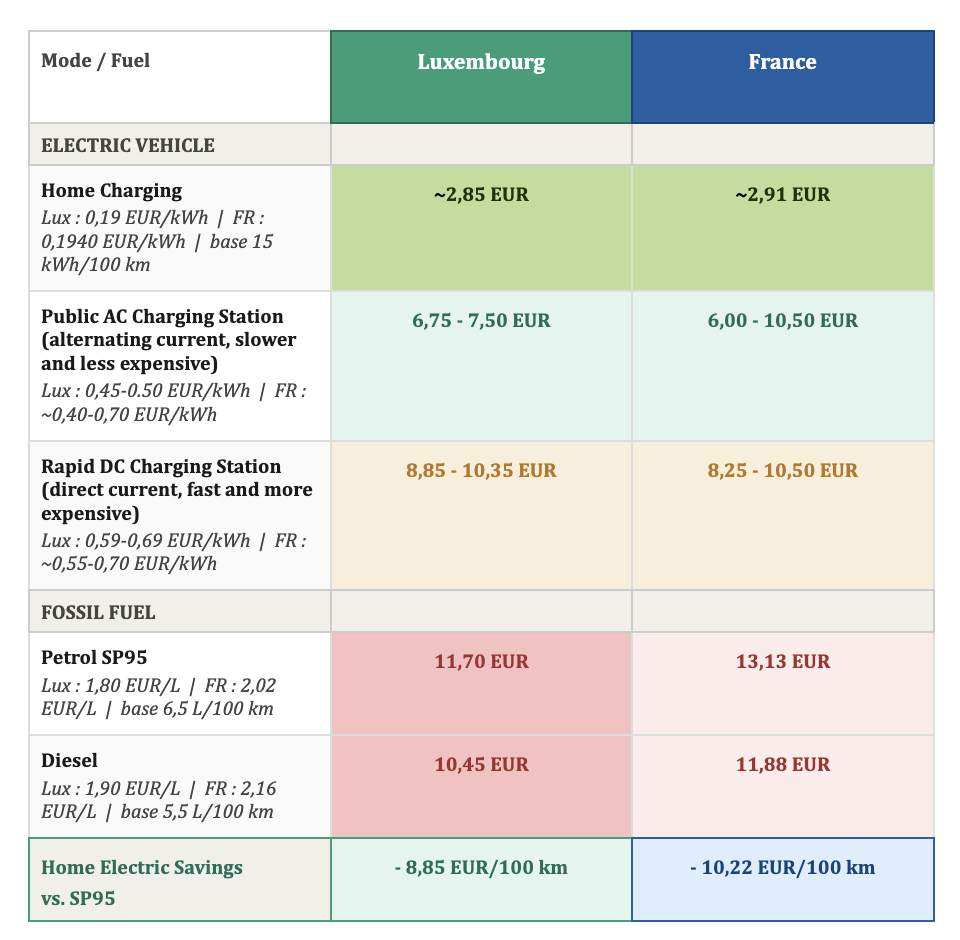
The oil price surge driven by the disruptions in the Strait of Hormuz has radically reshaped the financial equation in spring 2026. SP95 has jumped 21% in two months in Luxembourg and now exceeds €2.00 in France. The table below presents the verified costs as of April 30, 2026.
Home Charging: The Key to Cost-Effectiveness
80 to 90% of charging sessions should be carried out at home for drivers who have installed a home charging station at their residence. This is the number one condition to keep usage costs low. In Luxembourg, the home charging station is subsidised up to €1,250 through the Klimabonus. On motorways, the cost of rapid charging (~€9/100 km in Luxembourg and France) remains lower than petrol prices in May 2026, but the gap is narrowing: plan your long-distance trips ahead.
A reminder on EV charging stations:
1/ AC Charging - Alternating Current
For daily use
The AC to DC conversion takes place inside the vehicle, via its onboard charger (OBC). The charging station simply delivers current from the grid.
This is the solution used by all charging stations installed at home or in the workplace. Power output is limited by the vehicle's onboard charger.
Power: 3.7 to 22 kW, enabling a full charge in 3 to 14 hours.
Key rule: A 22 kW charging station will not charge any faster if the vehicle's onboard charger is limited to 11 kW. The vehicle sets the maximum AC power, not the charging station.
2/ DC Charging - Direct Current
For long-distance travel
The AC to DC conversion takes place inside the charging station. Direct current flows straight into the battery, without going through the onboard charger.
Significantly higher power outputs are possible. However, the installation cost of a DC charging station exceeds €50,000, making it unfeasible for residential use.
Power: 50 to 350 kW, enabling a full charge in 15 to 45 minutes.
Key rule: Occasional use is recommended to preserve battery health. For long motorway journeys, a 20 to 45 minute break is sufficient to go from 10% to 80% state of charge.
Overdrive’s advice: In the current context, the financial break-even point has accelerated. For most drivers exceeding 15,000 km/year with charging primarily at home, the EV becomes cost-effective from the very first year.
2. Government Incentives in 2026 in France and Luxembourg
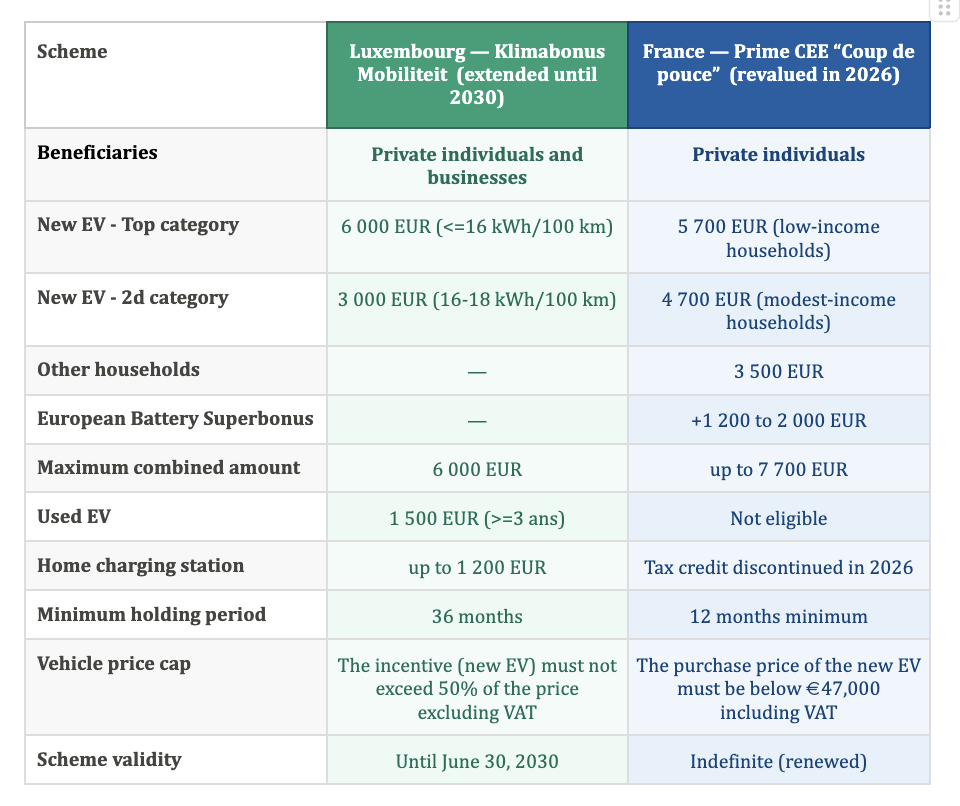
Both countries have strengthened their schemes in 2026. Below are the amounts in force at the time of publication of this article.
1/ Luxembourg: the Klimabonus extended until 2030
In February 2026, the Government Council adopted a preliminary bill extending the Klimabonus Mobiliteit until June 30, 2030. The current scheme is therefore renewed without interruption: €6,000 for EVs whose consumption does not exceed 16 kWh/100 km, €3,000 for those between 16 and 18 kWh/100 km. From January 2027, a pre-financing mechanism will allow residents to have the incentive deducted directly from the invoice at the dealership.
Key point for non-resident cross-border workers: the Klimabonus remains available to any owner of a vehicle registered in Luxembourg, whether resident or not. In the case of leasing, the incentive may be granted to the holder if the owner waives it, a provision particularly useful for corporate fleet arrangements.
2/ France: CEE Premium 2026 (formerly the ecological bonus)
Scenario A: For Low-income households, reference tax income per unit <= €16,300 → €5,700
Scenario A + European battery surbonus: if the vehicle is assembled in Europe with a European battery (ADEME list) → +€1,200 to €2,000 additional, for a total of €6,900 to €7,700
Scenario B: Modest-income household: reference tax income per unit between €16,301 and €26,300 → €4,700
Scenario C: Other households: reference tax income per unit > €26,300 → €3,500
Common conditions: New 100% electric vehicle, Price < €47,000 including VAT excluding options, Weight < 2,400 kg, ADEME Eco-score >= 60/80 (tightened on 01/01/2026), Purchase or LOA/LLD >= 24 months, Private individuals only
3. An Overview of Total Cost of Ownership (TCO) for Private Individuals: Electric vs. Petrol Showdown
Here is a simplified version of the Total Cost of Ownership (TCO) analysis, providing an overview based on May 2026 prices for a mid-segment vehicle:
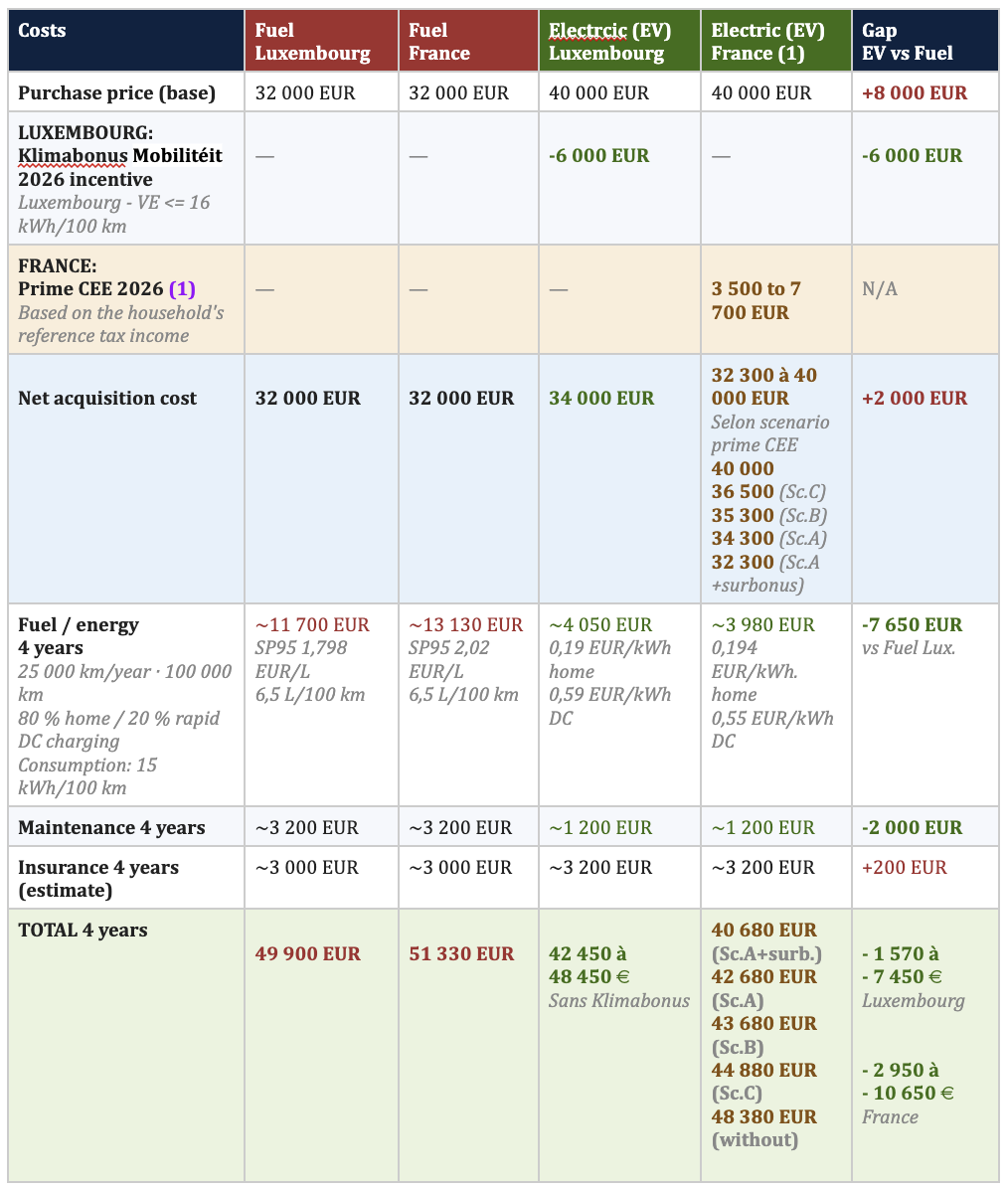
(1) See above France : Prime CEE 2026
TCO: What you will need to include in your tailored calculation:
This table presents a deliberately simplified view of the TCO, focused on certain usage costs for private individuals. The overall calculation must be carried out on a case-by-case basis and must notably include the following items: residual value and depreciation at resale, financing cost, corporate taxation (recoverable VAT, annual CO₂ emissions tax, depreciation ceiling, benefit in kind for company vehicles), acquisition taxes (registration document, CO₂ ecological malus, weight-based malus), tyres and technical inspection fees, home charging infrastructure (charging station, installation, tax credit), subscriptions to public charging networks, roadside assistance and replacement vehicle, etc.
TCO and residual value:
Residual value has a significant impact on the total cost of ownership and must be analysed rigorously on a case-by-case basis. This item can work in favour of internal combustion vehicles in certain segments, with petrol vehicles historically showing a more predictable depreciation curve. However, this advantage for petrol must be put into perspective, as since 2025 we have been seeing a growing increase in residual values for electric vehicles among long-term leasing providers, driven by rising demand on the used-vehicle market and attractive running costs. A point to monitor closely when negotiating your next leasing contract.
For a complete, personalised and fully costed TCO calculation, tailored to your specific vehicle and driver profile, contact Overdrive: we will carry out a comprehensive analysis taking into account all of these items as well as the financing, taxation and usage trade-offs specific to your case.
In summary: over 4 years at 25,000 km/year, the electric vehicle is cheaper in both countries for private individuals, even though our analysis focused on selected items only.
In Luxembourg: -€7,450 in favour of electric thanks to the Klimabonus. At 30,000 km/year, the advantage exceeds €9,000.
In France (Sc. C, other households): The advantage can exceed €10,000 for Category A households with the surbonus. And without any incentive at all: an advantage of €2,950 for electric, driven solely by energy and maintenance savings.
Maintenance: the electric vehicle's advantage
An electric vehicle eliminates the most frequent maintenance items: engine oil, spark plugs, timing belt, clutch. Regenerative braking preserves the brake pads. Across the fleets managed by Overdrive, we observe a reduction in maintenance costs of 50 to 65% compared to their internal combustion equivalents. On the other hand, tyre wear is often higher on heavy models with high torque (Nm), a factor to factor into your calculation.
3. Conclusion: is this the right time to switch?
In May 2026, the answer is yes, provided two rules are respected: driving enough mileage (more than 15,000 km/year) and charging primarily at home. The convergence of three factors creates an exceptional window of opportunity: the historic surge in fuel prices, a favourable tax framework in place at least until 2030, and the revaluation of French incentives.
For cross-border workers driving more than 15,000 km/year with charging primarily at home, the financial break-even point is now reached in the second year in most configurations, compared to the third year just twelve months ago. For SMEs and large companies in Luxembourg, the combination of the Klimabonus, reduced maintenance and favourable taxation makes the switch to electric a rational management decision, regardless of any environmental conviction.
SP95 Lux. - 30 april 2026: 1,80 EUR/L +21 % en 2 mois
Annual energy savings: ~2 000 EUR at 25 000 km/year vs SP95 Lux.
Klimabonus max - jul. 2030: 6 000 EUR - New EV <= 16 kWh/100 km
TCO gain over 4 years: ~8 000 EUR - May 2026 estimate, excluding residual value
Get Your Personalised Cost Audit
As an outsourced fleet manager and independent broker, Overdrive does not defend any brand. We identify the least costly solution based on your profile, whether you are a cross-border worker, a private individual or a fleet manager. Every month of postponed decision represents a real cost at current fuel prices.
Overdrive · Gestionnaire de flotte France / Luxembourg, courtier indépendant · Article Guide pratique n°1 - mai 2026